Entry · Ref B6RW5GRP
Dental Crowns Oxnard CA for Decayed Teeth Restoration
- Posted
- 2026-09-28
- Last amended
- 2026-09-28
- Account
- @titustcik760

A badly decayed tooth rarely fails all at once. More often, it breaks down in stages. A small cavity turns into a larger filling. The filling chips. The tooth starts catching floss. Then one morning, a corner shears off while you are eating something ordinary, maybe toast, maybe a burrito, maybe nothing harder than scrambled eggs. At that point, the conversation often shifts from a simple filling to a full-coverage restoration. That is where dental crowns come in.
For patients looking into Dental Crowns Oxnard CA, the question is usually not whether crowns exist or what they are in a textbook sense. The real question is whether a crown is the right answer for this tooth, right now, and what that means for comfort, cost, longevity, and future dental health. Decayed teeth can sometimes be saved beautifully with a crown, but only when the remaining structure is strong enough, the decay is fully removed, and the treatment plan is built on sound judgment instead of wishful thinking.
A crown is not magic. It does not reverse decay, and it does not make a neglected tooth healthy by itself. What it can do, when used correctly, is protect and reinforce a weakened tooth after the diseased portion has been removed. For many people, that is the difference between keeping a natural tooth for years and losing it much sooner.
When decay moves beyond a filling
There is a point at which a tooth no longer has enough healthy enamel and dentin to hold another routine filling reliably. This tends to happen when decay undermines one or more cusps, when an old filling has become very large, or when cracks begin to form around the remaining walls of the tooth. Molars are especially vulnerable because they absorb heavy bite forces every day. Premolars can also split if too much internal structure is gone.
In practice, the decision often comes down to how much tooth is left after removing decay. A small cavity can usually be restored directly with composite. A deeply decayed tooth, especially one with a failing filling that already occupies half or more of the chewing surface, is a different situation. That tooth may look repairable from the outside but behave poorly under pressure. If a dentist sees thin walls, unsupported cusps, recurrent decay extending under an old restoration, or a history of repeated breakage, a crown becomes a much more defensible recommendation.
This is one reason patients are sometimes surprised. The tooth may not hurt much. It may still be chewing. Yet the structural risk is already high. Pain is not a reliable measure of how compromised a tooth is. Some severely decayed teeth stay quiet until the nerve becomes inflamed or the tooth fractures below the gumline. By then, the options narrow.
What a crown actually does for a decayed tooth
A crown covers the visible portion of the tooth above the gumline after the decay and weakened material have been removed. Think of it less as a cap in the casual sense and more as a custom-engineered shell designed to restore strength, contour, and function. The crown re-establishes proper shape so food does not trap as easily, supports the remaining tooth, and distributes bite forces more predictably.
That matters because decayed teeth are often fragile in uneven ways. A large cavity on the side may weaken one wall. A deep old filling may hollow out the center. A crack may begin where a cusp flexes during chewing. A crown brings those vulnerable parts under one protective structure. It does not make the tooth indestructible, but it gives the tooth a far better chance of surviving normal daily use.
For many patients in need of Dental Crowns Oxnard CA, the crown recommendation follows one of three common scenarios. The first is extensive decay that leaves too little sound enamel for a large filling. The second is a root canal treated tooth, which is more brittle and often benefits from full coverage. The third is a fractured tooth where enough healthy structure remains to restore it, but not enough to trust a conservative patch.
Why timing matters more than people expect
One of the hardest conversations in restorative dentistry is explaining that a crown that would have been straightforward six months ago may now require root canal treatment, gum treatment, crown lengthening, or extraction. Teeth do not pause once decay has started. Bacteria keep moving. Fillings keep leaking. Cracks keep propagating.
A decayed tooth can often be saved with a crown if treatment happens while the decay is still restorable and the fracture has not extended too far. Delay changes the biology and the engineering at the same time. The tooth becomes more infected, and it also becomes weaker. That combination is what turns a manageable case into a complicated one.
This is especially relevant for back teeth that have lost a substantial amount of structure. People commonly adapt by chewing on the other side. The absence of pain creates a false sense of stability. Then a sharp pain appears with cold, or a crown-sized piece breaks off, or the tooth starts throbbing at night. At that stage, the dentist is not just planning a restoration. They are evaluating whether the pulp is still healthy, whether the decay has gone under the gumline, and whether there is enough ferrule, meaning enough solid tooth above the gum to support a durable crown.
The exam behind a sound recommendation
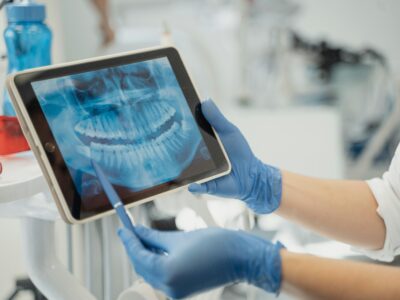
A thoughtful crown evaluation is more than a quick glance. A dentist will typically examine the visible damage, existing restorations, bite pattern, gum condition, and X-rays. The X-ray helps estimate the depth of decay and whether the nerve or surrounding bone is affected, but it does not tell the whole story. Some cracks do not show well. Some margins look acceptable on a film but reveal soft decay clinically once an old filling is removed.
This is where experience matters. The best treatment plans account for uncertainty. Sometimes a tooth appears crownable on the X-ray but turns out to need a buildup because hidden decay extends further than expected. Sometimes the tooth also needs root canal therapy because the decay or crack has already irritated the pulp beyond recovery. Good dentists explain these possibilities before treatment, not after the fact.
A practical example: a lower molar with a large silver filling and visible decay at the edge may seem like a routine crown case. Once the filling is removed, the dentist may find decay tracking deeper between the roots or one remaining cusp splitting away. If there is still enough sound structure to create a stable foundation, the crown plan proceeds, sometimes with a core buildup first. If the damage extends too far below the gumline or into the root in a way that cannot be predictably restored, saving the tooth may no longer be the best option. That is not a failure of the crown. It is the reality of how far the disease had already progressed.
Materials, appearance, and real-world durability
Patients often want to know which crown material is best. The honest answer is that it depends on the tooth, the bite, the visible smile zone, grinding habits, and the amount of remaining natural structure.
Porcelain-based and ceramic crowns are popular because they can look very natural, especially on front teeth and premolars. Zirconia is widely used because it combines strength with pleasing esthetics, though not every zirconia crown is the same. Porcelain-fused-to-metal crowns are still used in some situations and have a long clinical track record, though the metal margin can become visible over time in certain cases. Full metal crowns remain one of the most durable choices for heavy function in less visible areas, but many patients prefer tooth-colored options.
Material selection should match function. A front tooth crown is judged heavily on translucency, color blending, and edge detail. A crown on a second molar is judged more on strength, fit, and how it handles force. There is no prize for choosing the prettiest material if it is the wrong fit for the bite. There is also no reason to default to the strongest-looking material if it sacrifices appearance where appearance matters.
Dentists who provide Dental Crowns Oxnard CA often spend a fair amount of time discussing these trade-offs because the right answer is individual. A patient who clenches at night, has a short clinical crown, and already shows wear facets presents a different challenge than someone with a stable bite and a front tooth darkened after trauma.
What the preparation appointment usually feels like
The process is more controlled and comfortable than many patients expect. Once the tooth is numbed, the dentist removes decay, old filling material if present, and any unsupported tooth structure. If the tooth has lost too much internal bulk, a buildup may be placed to create a proper foundation. Then the tooth is shaped so the final crown can seat securely with enough thickness for the chosen material.
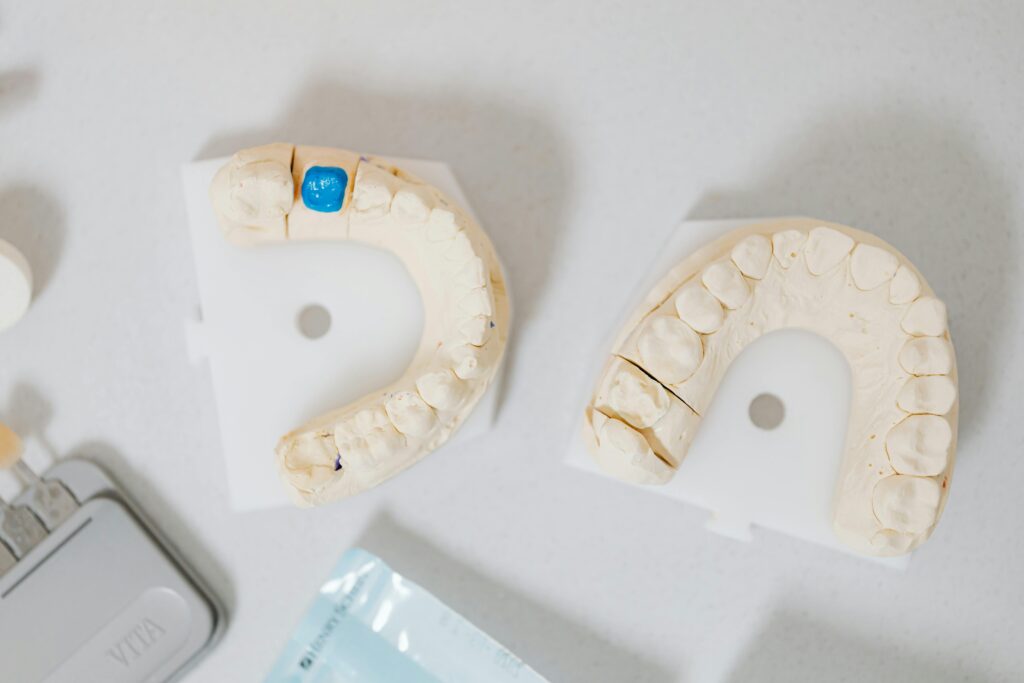
Impressions or digital scans are taken, and a temporary crown is usually placed while the final crown is being fabricated. The temporary matters. It protects the prepared tooth, keeps adjacent teeth from drifting, helps maintain gum contour, and gives the patient a preview of how the tooth will function in the short term.
Temporary crowns are not meant for hard chewing or long-term service. They can feel slightly different from the final restoration, and they may come loose if exposed to sticky foods or heavy pressure. That does not necessarily mean anything is wrong with the underlying treatment. It means the temporary is doing a temporary job.
When the final crown returns, the dentist checks the fit, bite, contacts with neighboring teeth, and appearance before bonding or cementing it into place. The bite adjustment phase is more important than many people realize. Even a beautifully made crown can feel wrong if it contacts too heavily during chewing or if it interferes with side-to-side movements. Fine adjustments often determine whether a new crown fades into the background or keeps announcing itself every time the patient closes.
The root canal question
Patients often hear the words crown and root canal together and assume they always go hand in hand. They do not. A decayed tooth may need a crown without a root canal if the nerve remains healthy or only mildly irritated in a reversible way. On the other hand, if decay is deep enough to infect or irreversibly inflame the pulp, root canal treatment may be necessary before the crown is placed.
This distinction matters because the crown restores the external structure, while the root canal addresses the internal nerve and infection. One does not replace the other. If a tooth needs both and receives only one, the result is incomplete care.
There is also a timing issue. Sometimes a dentist prepares the tooth and places a temporary, then waits to see whether symptoms settle before proceeding with the final crown. That approach can be reasonable in borderline cases, especially when decay was deep but the nerve response remains uncertain. Clinical judgment is crucial here. Overtreating every deep cavity with a root canal is poor practice. Pretending a clearly infected tooth can be fixed with a crown alone is just as problematic.
How long a crown can last, and what shortens its life
Crowns can last many years, often well over a decade, but lifespan is not guaranteed. Longevity depends on the amount of remaining tooth structure, margin quality, oral hygiene, diet, bite forces, grinding, and how well the crown was designed and seated in the first place.
What usually ends a crown is not the ceramic itself shattering out of nowhere. More often, Dental Crowns Oxnard CA trouble starts at the margin where the crown meets the tooth. If plaque accumulates consistently, decay can recur there. If the patient clenches or grinds, the underlying tooth or cement seal can be stressed over time. If the crown was placed on a tooth with a questionable crack, the crack may progress deeper later.
A crown is therefore not a free pass. It is a high-value restoration on a tooth that has already lost some of its biological reserve. Good home care, regular maintenance, and bite protection when indicated make a real difference.
Night guards deserve a special mention. People who grind often underestimate the forces involved. I have seen otherwise excellent crowns chip, loosen, or become symptomatic because an untreated clenching habit kept overloading the tooth. A properly fitted night guard is not glamorous, but it protects a major investment.
The subtle signs a crowned tooth needs attention
Problems do not always announce themselves dramatically. A crowned tooth may need reevaluation if it becomes persistently sensitive to biting, catches floss repeatedly at the margin, develops a bad taste, traps food in a new way, or feels tender when releasing pressure. Gum inflammation around a single crown can also be a clue that the margin is overcontoured, rough, or harboring plaque.
Sometimes patients notice a mild cold sensitivity for a short period after crown placement, particularly on vital teeth that were heavily restored. That can settle. What should not be ignored is increasing pain, spontaneous throbbing, swelling, or a bite that feels high and never normalizes. Early adjustment can prevent a lot of unnecessary frustration.
Cost, value, and the mistake of comparing only price
Crowns are a significant dental expense, and patients are right to ask careful questions. Still, comparing crown fees without comparing diagnosis, materials, lab quality, and the amount of tooth left can be misleading. Two crowns are not interchangeable simply because they occupy the same tooth number.
Value comes from fit, planning, and prognosis. A well-made crown on a tooth with adequate structure and healthy surrounding tissues can deliver years of service. A cheaper crown on a poorly selected tooth may fail early, not because the crown itself was inexpensive, but because the underlying case was unstable from the start. Saving money on the wrong tooth can become more expensive once retreatment, root canal therapy, extraction, or replacement enters the picture.
For people exploring Dental Crowns Oxnard CA, it is worth discussing not just the fee, but the expected lifespan, alternatives, whether a buildup is needed, whether the tooth may require endodontic treatment, and what maintenance will matter afterward. Those are the questions that reveal the real value of the treatment.
When a crown is not the right answer
Not every decayed tooth should receive a crown. If decay extends Dental Crowns Oxnard CA too far below the gumline, if there is a vertical root fracture, if the remaining tooth structure is minimal and cannot support a predictable ferrule, or if severe periodontal breakdown has compromised the tooth, a crown may only postpone an inevitable failure. In those cases, extraction and replacement planning may be more honest and more cost-effective.
There are also cases at the other end of the spectrum, where a crown would be more aggressive than necessary. If the decay is moderate and enough healthy tooth remains, an inlay, onlay, or bonded filling may preserve more natural structure. Conservative dentistry still matters. The goal is not to place crowns whenever a tooth is damaged. The goal is to choose the restoration that best balances preservation and durability.
That balance is one of the clearest markers of a careful restorative practice. Teeth should not be under-treated to avoid difficult conversations, and they should not be over-prepared for convenience. The right recommendation sits in the middle, guided by the actual condition of the tooth.
Choosing a provider for dental crowns in Oxnard
Finding the right dentist for restorative work is partly about credentials and partly about communication. Patients benefit when the dentist can explain what is being seen, what is uncertain, and why one option is preferred over another. A strong clinician should be able to show the cracked filling, the decay on the X-ray, the thin remaining cusp, or the recurrent decay at the margin, then connect those findings to the treatment plan in plain language.
In a place like Oxnard, where patients may be balancing work schedules, family obligations, insurance limitations, and dental anxiety all at once, practical communication is not a luxury. It is part of good care. So is attention to bite, comfort, and follow-up. A crown appointment is not just a technical procedure. It is an exercise in risk management for a tooth that is already compromised.
If a dentist takes time to explain why the tooth is restorable, what could change once decay is fully uncovered, and how to protect the finished crown afterward, that is a good sign. If the explanation is rushed, vague, or dismissive, it is reasonable to ask more questions or seek a second opinion.
Keeping the restored tooth healthy for the long haul
Once the crown is in place, maintenance is straightforward but important. Brush carefully at the gumline, floss or use appropriate interdental cleaning daily, attend recall visits, and report any bite changes or persistent sensitivity. Avoid using crowned teeth as tools for tearing packages or cracking hard objects. If grinding is part of the picture, wear the guard consistently.
Patients sometimes ask whether a crowned tooth can decay. The answer is yes, because the crown covers the tooth but does not replace it entirely. Decay can still develop at the exposed margin if plaque control is poor. That is why the success of a crown depends partly on the dentist and partly on the patient.
There is also a psychological piece to this. Once a painful or crumbling tooth is restored, people often want to stop thinking about it. Understandable, but unwise. The best crown is the one that disappears into normal life precisely because it is maintained well enough that it never demands attention again.
For decayed teeth that are still restorable, crowns remain one of the most reliable ways to rebuild function and protect what is left of the natural tooth. In the right case, at the right time, they are not merely a repair. They are a second chance for a tooth that has been asked to do more than its damaged structure can safely handle.
Omni Dental Specialty
1690 E Gonzales Rd
Oxnard, CA 93036, United States
Phone: +1 805-410-9603
FAQ About Dental Crowns Oxnard CA
What is the average cost of a crown in California?
The fee depends on the crown material, tooth condition and any additional treatment. Request an itemized estimate from Omni Dental Specialty after an examination, and confirm insurance benefits before scheduling.
How long do dental crowns last?
Longevity varies with the material, fit, oral hygiene and biting habits. Regular dental reviews help identify wear, damage or decay. A crown does not need replacement solely because it reaches a particular age.
Do teeth go bad under crowns?
Decay can develop in the remaining natural tooth, particularly near the crown margin. Brush with fluoride toothpaste, clean between teeth daily and keep dental appointments. Report new pain or looseness promptly.
Which crown is best for bruxism?
No material suits everyone. Your dentist assesses grinding, tooth position, bite forces and appearance before recommending a crown. A protective appliance may also be recommended to manage stress on the restoration.